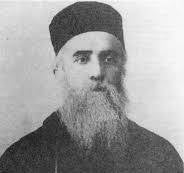
Selections from the Writings of St. Nektarios
Selections from the Writings of St. Nektarios
Seek God daily. But seek Him in your heart, not outside it. And when you find Him, stand with fear and trembling, like the Cherubim and the Seraphim, for your heart has become a throne of God. But in order to find God, become humble as dust before the Lord, for the Lord abhors the proud, whereas He visits those that are humble in heart, wherefore He says: “To whom will I look, but to him that is meek and humble in heart?”
The Divine light illumines the pure heart and the pure intellect, because these are susceptible of receiving light; whereas impure hearts and intellects, not being susceptible of receiving illumination, have an aversion for the light of knowledge, the light of truth; they are like darkness….God loves those who have a pure heart, listens to their prayers, grants them their requests that lead to salvation, reveals Himself to them and teaches the mysteries of the Divine nature.
The pure heart perceives God and discovers Him where the guileful heart cannot see Him even when He is shown.
It is evident that unbelief is an evil offspring of an evil heart; for the guileless and pure heart everywhere discovers God, everywhere discerns Him, and always unhesitatingly believes in His existence. When the man of pure heart looks at the World of Nature, that is, at the sky, the earth, and the sea and at all things in them, and observes the systems constituting them, the infinite multitude of stars of heaven, the innumerable multitudes of birds and quadrupeds and every kind of animal of the earth, the variety of plants on it, the abundance of fish in the sea, he is immediately amazed and exclaims with the Prophet David: How great are Thy works, O Lord! In wisdom hast Thou made them all.” Such a man, impelled by his pure heart, discovers God also in the World of Grace of the Church, from which the evil man is far removed. The man of pure heart believes in the Church, admires her spiritual system, discovers God in the Mysteria, in the heights of theology, in the light of Divine revelations, in the truths of the teachings, in the commandments of the Law, in the achievements of the saints, in every good deed, in every perfect gift, and in general in the whole of creation. Justly then did the Lord say in His Beatitudes of those possessing purity of heart: “Blessed are the pure in heart, for they shall see God.”
He who does not know himself does not know God, either. And he who does not know God does not know the truth and the nature of things in general…. He who does not know himself continually sins against God and continually moves farther away from Him. He who does not know the nature of things and what they truly are in themselves is powerless to evaluate them according to their worth and to discriminate between the mean and the precious, the worthless and the valuable. Wherefore, such a person wears himself out in the pursuit of vain and trivial things, and is unconcerned about and indifferent to the things that are eternal and most precious.
Grace does not descend upon one who is enslaved to sin, for there is no communion between light and darkness. In order to save man, grace must find him pure, for it is not merely a question of being delivered from bondage to the devil, but also of reconciliation with God, of communion with Him, of man’s deification.
The distinguishing marks of repentance are contrition, tears, aversion towards sin, and love of the good.
Virtue is the fulfillment of the Law of God. Basil the Great says: “Virtue is the avoidance of evil and the doing of good.” He who partakes of true virtue partakes of nothing other than God, for God is complete virtue. Basil says: “Of all our possessions, virtue is the only one which cannot be taken away, abiding with us both in this life and after death.”
It [love] is the basis of the happiness of men, and the foundation of all the virtues. It is the ladder that elevates man to perfection, rendering him a true image and likeness of God.
Love of God is knowledge of God, for one who loves, loves what one has come to know, and it is impossible for one to love what is unknown…Love of God expresses the yearning to be united with God as the supreme good.
Training accustoms one to be lenient, temperate, capable of controlling his anger, subduing his desires, doing works of charity, showing love for his fellow men, practicing every virtue. Training is virtuous askesis, rendering one’s way of life admirable.
Attention is the first teacher of truth and consequently absolutely necessary. Attention rouses the soul to study itself and its longings, to learn their true character and repulse those that are unholy. Attention is the guardian angel of the intellect, always counseling it thus: be attentive. Attention awakens the soul, rouses it from sleep…Attention examines every thought, every desire, every memory. Thoughts, desires and memories are engendered by various causes, and often appear masked and with a splendid garb, in order to deceive the inattentive intellect and enter into the soul and dominate it. Only attention can reveal their hidden form. Often their dissimulation is so perfect that the discernment of their true nature is very difficult and requires the greatest attention. One must remember the saving words of the Lord: “be wakeful and pray that ye enter not into temptation.” He who is wakeful does not enter into temptation, because he is vigilant and attentive.
True prayer is undistracted, prolonged, performed with a contrite heart and an alert intellect. The vehicle of prayer is everywhere humility, and prayer is a manifestation of humility. For being conscious of our own weakness, we invoke the power of God.
Prayer unites one with God, being a divine conversation and spiritual communion with the Being that is most beautiful and highest.
Prayer is truly a heavenly armor, and it alone can keep safe those who have dedicated themselves to God. Prayer is the common medicine for purifying ourselves from the passions, for hindering sin and curing our faults. Prayer is an inexhaustible treasure, an unruffled harbor, the foundation of serenity, the root and mother of myriads of blessings.
To those who receive Holy Communion worthily, it offers not only salvation, but also a great number of other gifts, through which man is rendered an image and likeness of God. Through Divine Communion we are united with God and enter into relation and contact with Him. Through such union we receive the gifts of the Holy Spirit: love , joy, peace, forbearance, goodness, faith, meekness, self-control, and so many other virtues. The eyes of our soul are opened, the mind is illumined, and the heart is purified. Divine Communion cures the sick heart and body of those who approach it with faith. It often saves our life and rescues us from dangers, and effects many other marvelous things.
Every day I pronounce blessed those who have dedicated themselves to God, and who live and move in Him. What, indeed, is more precious than that way of life, what more glorious. It works beautifully the divine image and lends it its archetypal beauty. It leads to blessedness, it leads to spiritual philosophy, it reveals mysteries, it teaches truth, it causes the word of God to be fresh in the heart, it leads with sureness to the most longed for goal, it elevates man to heaven. It renders breathing an unceasingly melody, it makes the whole of life harmonious, it unites man with the angels, it renders man Godlike, it leads him upward to the Divine, it unites him with God.
From Modern Orthodox Saints vol.7 St. Nektarios of Aegina by Constantine Cavarnos The Institute for Byzantine and Modern Greek Studies, Belmont MA.
1981
Add comment
Comments