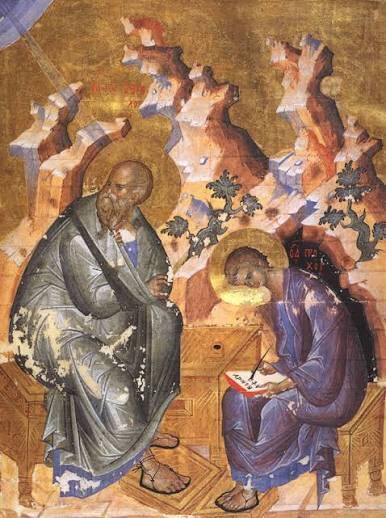
“Ye believe in God, believe also in me;”
Here the Lord calms the inner turmoil of His disciples, saying in effect: Faith in God the Father and in Me will dispel all your fear and confusion. The remedy against fear and anxiety is faith in God and Christ. “He who believes in me will never thirst.” Belief as faith should not be reduced to intellectual assent. Faith is not a matter of mere intellectual understanding and so it doesn’t grow simply through rational study. As Elder Vassilios, formerly of Stavronikita and Iviron, writes: “Faith as trust in God and abandonment of oneself to Him, is closely related to love which is God Himself… When you love, when you offer as much as you can to your brother - to Christ - and end up offering yourself to God, then you know Him: you believe. Your faith increases… In the Church, love and faith are recognized as two realities, interpenetrating, without confusion or division.” Every man who comes to Jesus and is united with Him through faith soon learns that faith is the driving force of a virtuous life and that a virtuous life in turn strengthens faith.
“In My Father’s house are many mansions”
Jesus goes on to assure the disciples that He is not abandoning them and that He will bring them to Himself, “that where I am, ye may be also.” He is saying: There are many dwelling places under the rule and authority of My Father. Therefore, do not be afraid; I will always be with you. The Lord willingly surrenders Himself to evil powers that they may put Him to death and that He may go through death to Heaven and the House of His Father where He prepares a place for His faithful. The Father’s house has many mansions for the abiding of the many diverse saints of different classes and ranks. St. Basil the Great writes: “God will reward some with greater glory and some with lesser glory; and since one star differs from another star in glory and there are ‘many mansions in the Father’s House’, He will give some rest in a higher and worthier state and others in a lower state.” St. Augustine says the disciples were made "certain and confident that after all the perils of temptations they shall dwell with Christ in the presence of God. For, albeit one is stronger than another, one wiser than another, one more righteous than another….none of them shall remain outside that house, where everyone, according to his deserts, is to receive a mansion…The saints, like the stars in the sky, obtain in the Kingdom different mansions of diverse degrees of brightness…and God will be all in all in such a way, that, as God is love, love will bring it about that what is possessed by each will be common to all…There will not, therefore, be any envying amid this diversity of brightness, since in all of them will be reigning the unity of love.”
May we find consolation and hope in these divine words.
I will come again and receive you unto Myself; that where I am, there ye may be also;
“And the way ye know.”
The Lord will ascend to prepare a place for His disciples. His words here speak to the intimate and loving bond between Christ and His disciples. The Way comprises death, resurrection and ascension to Heaven and after His disciples complete their apostolic ministry on earth, Jesus will establish them in the Kingdom to co-reign with Him eternally. Death brings separation but resurrection brings reunion and life together in the heavenly City of God. But they will reign eternally with Him only after they bear witness to the truth and die for it. So we too must bear witness in our daily lives to the Truth of our faith.
I am the Way, the Truth and the Life; no one comes unto the Father but by Me.
“...I am in the Father, and the Father in Me…”
These words speak to the identity of essence and nature of the Father and the Son. St. Theophylact writes: “Thereupon Christ reveals the way and the destination, and shows that it is simple to come with Him: ‘I am the Way, and I am going to the Father. Follow me and you will surely ascend to the Father as well. I am also the Truth, so be assured that I am not deceiving you. Furthermore, I am the Life; not even death can prevent you from reaching the Father…There is no other way to get there except by Me.’ ”
“If ye had known me, ye would have known my Father also.” The disciples will know and see the Father in Christ. Jesus is the icon of God, the eternally begotten image of the Father; in Him we see the Father. It is for this reason that as Orthodox Christians we have no difficulty in saying we know God and commune with Him. The sacred Creed declares the Father and the Son to be of one essence. Knowledge of the Son is knowledge of the Father. “Yet dost thou not know Me, Philip? He that has seen me has seen the Father;”
He who knows Jesus’ divine nature knows God the Father in Jesus; for no one can know the Father except through Jesus, imitating Him and communing with Him. Jesus is for His disciples the road to the Father.
“Believe Me for the very works’ sake;”
“…The works that I do shall ye do also; and greater works than these shall ye do.”
Ask me anything in my name, that will I do.
The Son is in the Father. To show that His essence is the same as the Father, Jesus says that He speaks only what the Father speaks. They share one essence in two distinct hypostases. The words and works are of a single essence. The words bear witness to the fact that the Lord speaks the truth and these are confirmed by works of divine power. But if the words are not sufficient of themselves to convince you that the Father and the Son are one in essence, then believe for the works’ sake for they are the works of divine power which you see and cannot deny.
In what sense will they do greater works? Indeed, the Acts of the Apostles records Peter’s shadow healing people, Peter raising Tabitha and Paul raising Eutychos from the dead. The lame are healed and the possessed are exorcised. The term “greater” is likely a reference to the quantity and scope of the miracles over the course of the Apostolic ministry and the conversion of the Greco-Roman world.
The Lord is faithful to His promise but there is an important context to His words. It is necessary to love Him and keep His commandments for this promise to be fulfilled.The faithful encounter the Savior Christ in the commandments. St. Mark the Ascetic writes: “The Lord is hidden in His own commandments and is found by those who seek Him in proportion as they fulfill them.” Many say they fear and love but do the opposite in their deeds. God seeks for the love evidenced by deeds.This is the vital context to His promise - doing the will of God.
The disciples honor their Divine teacher by their faith; the teacher honors the disciples in return by exalting them and molding them into teachers. They are empowered to perform miracles like Jesus and to continue His divine work in building up the Church. These greater works the disciples perform through the power of Jesus, calling upon Him, working in His name and glorifying the Father through the Son. “Not I, but Christ in me.” Jesus abides in His disciples, both speaking and working, as the Father is in Jesus.
“If ye love Me, keep My commandments;”
There are three commandments that Jesus gave to His disciples on the night before His death: 1. Believe in God, believe also in Me; 2. A new commandment I give unto you, that ye love one another, even as I have loved you, that ye also love one another; 3. Do this in remembrance of me. The keeping of these commandments in all their depth and breadth nurtures a devoted love for Christ. Love submits the will of the one who loves to the will of the loved one. To love the Lord Jesus means to fulfill His commandments. The observance of these three commandments along with the virtues of the Beatitudes and the Gospel Law sustains this love, making it active, dynamic and inextinguishable. He who loves Jesus observes His commandments and he who observes His commandments, grows in his love for Jesus, becoming united with Him in will and activity and possessing the whole of Jesus in his heart.
“...that He may abide with you forever; even the Spirit of Truth; whom the world cannot receive, because it sees him not, neither knows him.”
“...but ye know Him; for He abides with you, and shall be in you,” “I will not leave you orphans”
Those who have received the Son and love Him and keep His commandments receive later the Spirit of Truth, Who abides with them, forever illuminating, delighting and sanctifying them. Man’s deification is effected through the reception of this deifying Spirit and thereby our human nature is fulfilled and perfected.
The Lord promises he will not leave them orphans but will send the Holy Spirit, the Comforter. Death would separate Jesus from the world but not from His friends. They would behold Him in the Spirit and live in Him a new and joyful life unknown to the world. The Spirit does miracles and brings perfect knowledge. And the fruit “of the Spirit is love, joy, peace.”
Those of the world cannot receive the Spirit of Truth, for the blind world does not perceive it. The reception of the Spirit is the contemplation and knowledge of the Spirit as united with the soul and abiding with it forever. Christ’s disciples gradually grow in the Spirit until the day of their anointing when the Holy Spirit descended upon them in the form of fiery tongues. Pentecost is a baptism in the Holy Spirit, a baptism of perfection. St. John Chrysostom says: “...the Spirit made them men of iron instead of men of clay, gave them wings, and allowed them to be cast down by nothing human.”
In keeping the commandments, the disciples and all the faithful express genuine love for Christ and He, in turn, will manifest Himself to the faithful. The faithful will behold the Son in the Father and the Father in the Son, the Son in themselves and themselves in the Son and will know the love with which the Father and the Son loved them and made them worthy of such knowledge.
“…If a man loves me, he will keep My word…”; He who keeps the word, is loved by the Father and the Son with a perfect love. God as Trinity will come to him and remain in him. The disciples were to see and understand this blessed oneness of the Triune God through the reception of the Spirit of Truth. “In the Holy Spirit are perceived all holiness and wisdom.”
“…the Holy Spirit, whom the Father will send in my name, He shall teach you all things, and bring all things to your remembrance, whatsoever I have said unto you.”
The Father sends the Holy Spirit in the name of the Son in order to work for the glory of the Son and complete His work, that is, the building of the Church. When the Paraclete(Comforter) comes, He will teach the disciples all that they have been taught by Christ, remind them of all that they have heard, give them the understanding of the words and commandments of Christ, and inspire them to be wise teachers.
“Peace I leave with you, my peace I give unto you;”
Christ is our peace, the peacemaker who makes peace between God and men, and between men who are at enmity with one another. Christ takes away the enmity between God and man by dying for the sins of all men and, as the new Adam, sanctifying our human nature. All who are at peace with God through Christ are also at peace with one another, because they are made brethren through baptism and regeneration in Christ and love one another like brothers and children of the one heavenly Father. The Prophet-King says: “In his days righteousness will rise and abundant peace.” The blessing of eternal peace is the possession of Christ and of His Church.
The Lord also restores to the faithful the inner peace that comes with a pure heart and soul. We might reflect on our own humanity by contemplating Christ as the perfect man Who enjoys inner peace. The inward peace of Christ consists of the harmony of His divine and human natures, the harmonious integration of the faculties of His soul and the calm of His purity and holiness as a man. Each of these natures is disposed harmoniously toward the other and each of the faculties of the soul is integrated harmoniously. Being free from conflict and fragmentation, there reigns within them eternal peace. Being at harmony and peace with Himself, Christ is also in harmony with His Father and with the Holy Spirit and at peace with them. He is at peace with all creation which He rules with Divine wisdom and love. This inward and outward peace Christ imparts through love to His own disciples and to us. We see and experience this peace in the person of saints of our time like elders Paissios, Porphyrios and Iakovos, who, through their ascetic struggle and intense liturgical life, acquired the peace of God. St. Seraphim said: “Acquire a spirit of peace and thousands around you will be saved.” When the soul of the Christian is united with the Spirit of God, knows God intimately, passionately loves Him with all its heart, and acts always according to His will, then the Christian will have acquired the true peace for which mankind longs.
_____________________________ To be continued.
Add comment
Comments