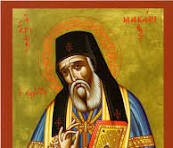
St. Makarios of Corinth on the Our Father verse “Hallowed be Thy Name”
Is it because God’s Name is not holy that we must ask for it to be hallowed? How can this be if He is the source of holiness? Is it not from Him that all things in heaven and on earth are sanctified? Why, then, does He ask us now to hallow His name? The name of God is by nature holy and all-holy, and the source of sanctification. When it is named, it sanctifies all things on which it is pronounced, and it does not admit of any increase or diminution of sanctity. However, God wants and loves that His name should be glorified by all His creatures as the prophet-psalmist says: Bless the Lord all his works (Ps.102:22). And He demands this, not so much for Himself, but that the creatures themselves may be sanctified by Him. For this reason, whatever we do, all must be done to the glory of God, according to the Apostle who says, And so, whether you eat, or drink, or whatever [else] you do, do it all to the glory of God (1Cor. 10:31).
When we do good and noble works in accordance with our holy faith, then God’s name is sanctified. As Christians, we glorify God - the source of wisdom and power - when other men see our good conduct. Likewise, we provide the unbeliever with an opportunity to come to a knowledge of the truth by seeing our works confirmed in our faith. The Lord commanded us to do this when He said: Likewise, let your light shine before all, so that they may see your good works and glorify your Father who is in heaven (Mt.5:16).
To do the opposite is to give cause for blasphemy against God. As St. Paul says: For the Name of God is blasphemed among the Gentiles because of you…(Rom.2:24, Is.52:5). This is a grave error, which is severely punishable, because men, and especially the unbelievers, may form the impression that we are ordered by our God to behave in an evil way. So, we must cultivate not only right faith and piety, but also a virtuous life and conduct.
Virtuous life is the keeping of the commandments of Christ as He Himself says: If you love Me, keep My commandments! (Jn.14:15). When our love for Him is revealed in the observance of His commandments, then our faith is confirmed. Thus, St. John Chrysostom states:
If no one can say Lord Jesus Christ except in the Holy Spirit, then it must be equally true that no one can possess confirmed faith, except in the Holy Spirit. But how can we actually obtain the help of the Spirit and persuade Him to stay with us? We can only achieve this through good works and perfect conduct. For as the light of a lamp is sustained by oil and goes out when the oil is spent, likewise the Grace of the Spirit is kindled in our soul and remains like a flame, sustained by oil, when good works and great mercy are found in us. When there is no mercy in us, the Spirit abandons us. We obtain the fire of the Spirit only through generous philanthropy and extended mercifulness, and thus, we do not fall away from the faith. Faith requires the help of the Spirit and the help of the Spirit is obtained through a pure life and excellent conduct.
Therefore, if our faith is to be confirmed, then we are in need of pure conduct, which, in turn, persuades the Spirit to remain in us and fill our life with His power. The opposite is also true, i.e. that evil deeds undermine the firmness of the faith, which is shown by what Paul says to Timothy, when he writes,...May you fight the good fight, keeping the faith and a good conscience (and a good conscience is formed by a life rightly lived), Some have rejected these and made a shipwreck of the faith (Tim.1:18-19). And again, elsewhere: Truly, the love of money is a root of all kinds of evil. Some have been led astray from the faith in their greed and they have pierced themselves with many sorrows (1Tim.6:10).
We see that both the unscrupulous and the greedy were led astray, because the former lost good conscience, and the latter were conquered by material goods. If we carefully take all this into account and we take care to develop perfect conduct, we shall obtain a double reward: one reward for good works and another for firmness of faith; for as food is to the body, so is good conduct to faith. And just as the nature of our flesh could not be sustained without food, so our faith cannot be maintained without good works; For just as the body is dead apart from the spirit, so is faith dead apart from works (Jam. 2:26).
Many embraced the faith and became Christians, but because they did not have good works commensurate with the faith, they fell away from the blessedness of salvation. As for us, let us become diligent both in faith and in good works so that we may call upon the Father and sanctify His name and proceed to the next petition of the Prayer, which refers to His Kingdom.
Add comment
Comments